Polyhouse & Smart Farming Website
Back to work
Case study·Agri / Polyhouse Web

Polyhouse & Smart Farming Website

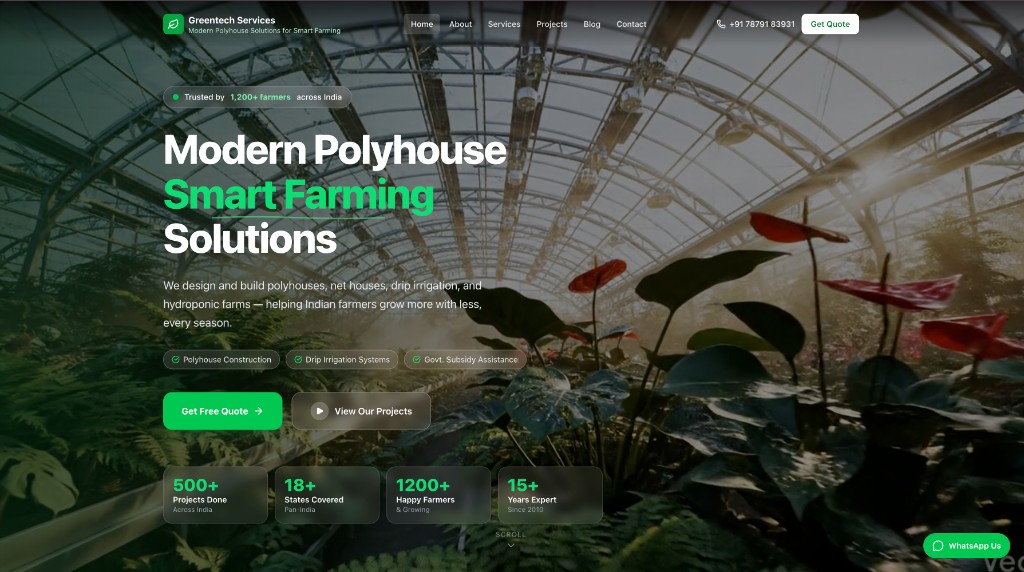
Built for agri engineering firms selling large on-farm projects: explain polyhouse and smart-farming solutions clearly, prove scale with projects and stats, and convert searches into calls, WhatsApp quotes, and site visits — not a product catalog or shopping cart.

Next.jsReactTailwindExpressFirebaseCMSSEOAnalytics
At a glance

Project highlights

Service-led IA: polyhouse, net house, drip irrigation, hydroponics, subsidy support

Project gallery with region, crop, and structure type for credibility

Local and pan-India SEO for high-intent farmer and investor queries

Quote and site-inspection forms via Express APIs into email or CRM

Firebase for secure admin uploads: site photos, brochures, testimonial media

Analytics on forms, tap-to-call, and WhatsApp clicks — not cart revenue

Deep dive

How we approached it

01

Polyhouse website, not e-commerce

This project type is a polyhouse and smart-farming services website: it presents turnkey protected cultivation for Indian farmers and agri businesses — structures, irrigation, hydroponics, and often government subsidy guidance. Visually and structurally it follows reference sites such as greentechexperts.in: strong hero, trust counters, service sections, featured farms, testimonials, and obvious actions like Get Quote, WhatsApp, and phone. Success is measured in qualified leads and booked site inspections, not checkout conversions.

02

How visitors use the site

Typical visitors compare vendors for high-ticket builds. They need service pages that spell out what polyhouse vs net house vs drip entails, a portfolio of completed projects with locations and acreage, proof of experience and warranties, and answers on timelines and subsidy paperwork. The site reduces repetitive phone explanations so your field team can focus on surveys and estimates.

03

Frontend — Next.js, React, Tailwind

Next.js and React deliver fast, SEO-friendly pages and smooth scrolling on low-end phones common in rural areas. Tailwind implements the dark premium layout, glass-style stat bands, and responsive project grids so the brand feels modern and industrial without sacrificing readability on long educational copy.

04

APIs — Express

Express backs server-side form handling for quotes and callbacks: validation, spam protection, and forwarding to email, CRM, or WhatsApp Business triggers. Optional webhooks connect a headless CMS so new project case studies can invalidate static paths and go live quickly after approval.

05

Admin & media — Firebase

Firebase Authentication and Storage let non-developers publish fresh project photos, PDF brochures, and subsidy explainers safely. Firestore can optionally store draft content or regional variants if you run state-specific landing pages for schemes like NHM or PMKSY.

06

CMS, SEO, and measurement

A headless or custom CMS keeps blog posts, scheme updates, and service copy editable without deploys. Technical SEO — clean URLs, structured data for local business, fast LCP — supports both map-pack and long-tail searches. Analytics focuses on lead signals: form submits, call clicks, and WhatsApp taps per service and region.

Want something similar?

Share your sector, timeline, and goals — we'll propose a stack and roadmap that fits.